

Dry Needling: What Is It and Could It Help Your Pain?

Updated: Aug 14
Dry needling, sometimes referred to as Western medical acupuncture, is a treatment technique that can be used alongside osteopathic care for certain muscle and joint problems. Fine, sterile needles are inserted into specific areas of muscle or soft tissue with the aim of helping to reduce pain, ease muscle tension and improve movement. In this article, I explain what dry needling involves, when I may use it and what you can expect during treatment.
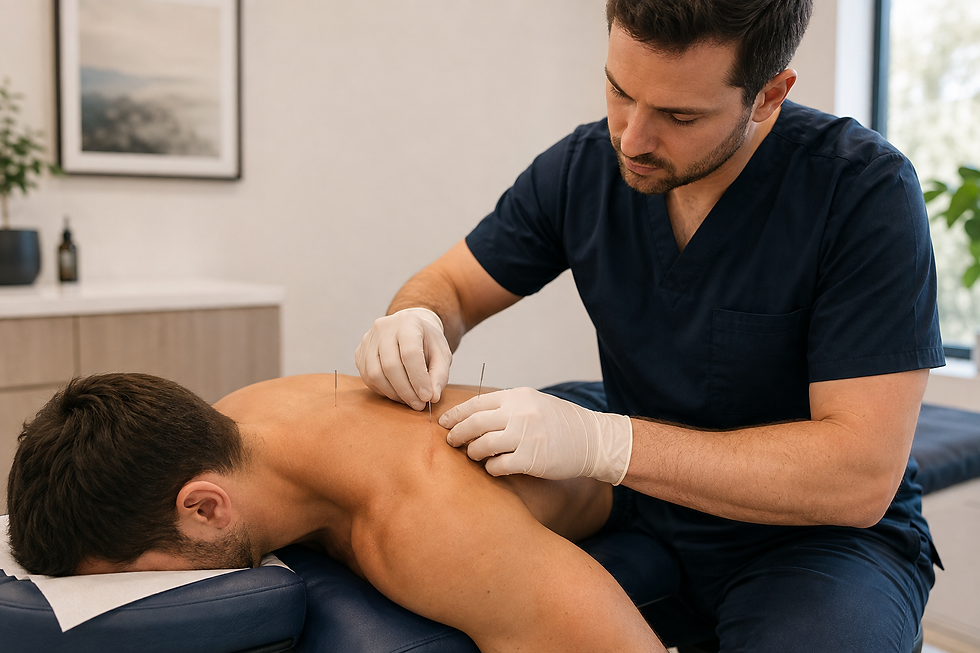
What is Dry Needling?
Dry needling is a technique used by appropriately trained healthcare professionals to help manage certain musculoskeletal problems. It involves inserting very fine, sterile, single-use needles into selected areas of muscle or soft tissue.
It is sometimes referred to as Western medical acupuncture. Although similar needles are used in traditional acupuncture, dry needling is generally based on Western anatomical and physiological principles and is used as part of a wider assessment and treatment approach.
At Fia Health, I do not use dry needling simply because an area is painful. I first assess what may be contributing to your symptoms and then decide whether needling is likely to be useful as part of your treatment.
How Does Dry Needling Work?
The exact way dry needling influences pain is still being researched. Current thinking suggests that inserting a needle into selected tissues may influence local muscle activity and the way the nervous system processes pain.
Some people experience a local twitch or aching sensation when a muscle is needled, while others feel very little.
Importantly, dry needling is not intended to be a stand-alone “cure”. I normally use it alongside other treatment where appropriate, which may include osteopathic techniques, advice, movement modification and rehabilitation.
What Might Dry Needling Help With?
Depending on the findings from your assessment, I may consider dry needling for problems involving:
muscular tightness or tenderness
myofascial pain
neck and shoulder tension
some types of back pain
muscular pain associated with sports or activity
certain persistent musculoskeletal pain presentations
Whether dry needling is appropriate depends on why you are experiencing the symptoms, rather than simply the area that hurts.
For some people another approach may be more suitable, and I will always explain this during your assessment.
What Are the Potential Benefits?
Some patients find that dry needling helps to:
reduce muscular discomfort
ease feelings of tightness
improve movement
make other hands-on treatment or rehabilitation more comfortable
Responses vary from person to person, and I would never promise that dry needling will work after a particular number of sessions.
What Happens During a Dry Needling Appointment?
Before using dry needling I will discuss your symptoms, medical history and any relevant medication, and assess the area concerned.
If dry needling is appropriate, I will explain what I intend to do and obtain your consent before treatment.
The needles used are very fine and sterile. You may feel very little when a needle is inserted, although occasionally you may experience a brief prick, ache or muscle twitch.
Dry needling may be used as part of an osteopathic appointment or booked as a standalone treatment where appropriate.
What Might I Feel Afterwards?
It is quite common for the treated area to feel mildly sore or heavy afterwards, a little like the feeling after exercise. This normally settles relatively quickly.
Minor bruising or a small amount of bleeding can occasionally occur. Some people may also temporarily feel light-headed or tired following needling. NHS information similarly notes temporary discomfort, bruising, bleeding, dizziness and drowsiness among recognised possible effects of needling.
Is Dry Needling Safe?
Dry needling is generally considered safe when carried out by an appropriately trained healthcare professional, but like any treatment involving needles it is not completely without risk.
Before treatment I will ask about your medical history, medication and anything else that could affect whether dry needling is suitable for you. Particular consideration may be required if, for example, you take blood-thinning medication, have an increased risk of bleeding, or have infection or skin problems in the area being treated.
Rare complications can occur depending on the area being treated, which is why appropriate clinical training, anatomy knowledge and safe needling technique are important.
Who Performs Dry Needling at Fia Health?
Dry needling at Fia Health is carried out by Jason Newman BSc (Hons) Ost, Registered Osteopath (5118), who has undertaken additional training in dry needling and Western medical acupuncture.
The General Osteopathic Council recognises dry needling/acupuncture as an adjunctive therapy that may be used by appropriately trained osteopaths alongside osteopathic care.
Is Dry Needling Rift for Me?
Not necessarily — and that is an important part of the way I practise.
Dry needling is one treatment option rather than something everyone who attends Fia Health will receive. My priority is to understand what is causing or contributing to your symptoms and then recommend what I believe is most appropriate for you.
Sometimes that may include dry needling. Sometimes osteopathic treatment, rehabilitation, advice or simply allowing the problem time to settle may be more appropriate.
Focus. Integrity. Authenticity. That means recommending treatment because it is clinically appropriate, rather than simply because it is available.
Want to Know Whether Dry Needling Might Be Suitable for You?
If you are experiencing muscle or joint pain and would like to discuss whether dry needling or osteopathic treatment may be appropriate, you are welcome to get in touch or book an assessment with Fia Health.


Comments